By Phillip C. Parrish, LCDR USN (Ret.)
October 5, 2025
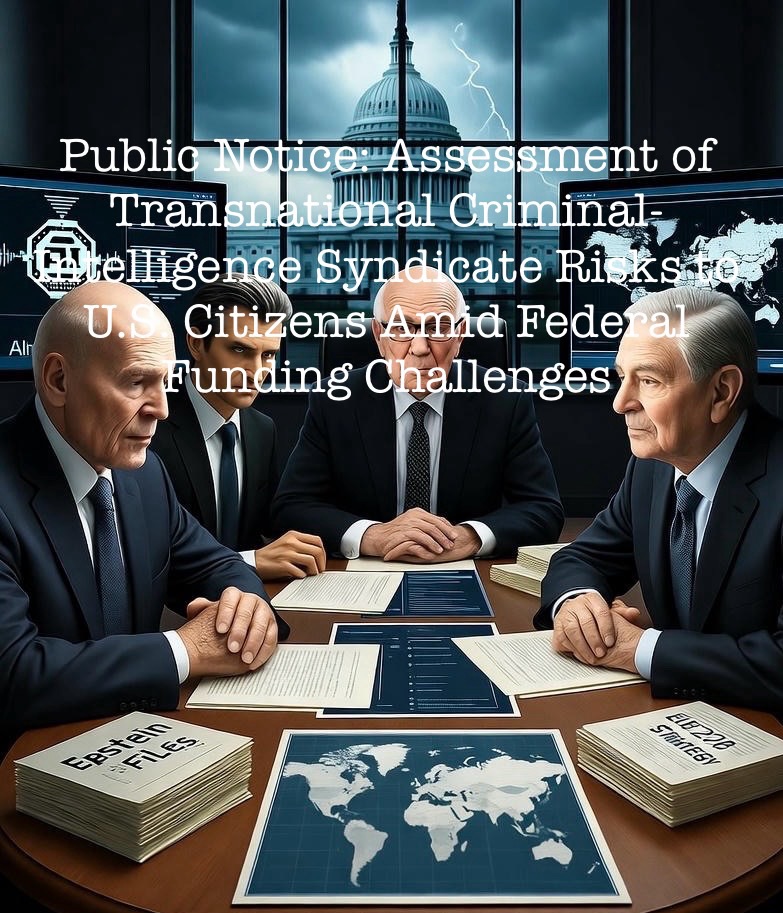
As a retired U.S. Navy Lieutenant Commander with 21 years of experience in counterterrorism, foreign policy, and information dominance warfare, I am issuing this public notice to inform American citizens about potential risks posed by a transnational network involving criminal and intelligence elements. This assessment is prompted, in part, by the current federal funding challenges, which highlight the importance of maintaining robust oversight and security measures during periods of uncertainty. Recent developments, such as partial releases of Jeffrey Epstein documents and disruptions of foreign disinformation operations, illustrate the need for continued vigilance. I encourage all ethical cyber experts—“white hats”—to pursue every legal avenue available to support these efforts and protect national interests.
Executive Summary
Available evidence suggests a decentralized transnational network, supported by significant private resources, influential officials, and foreign intelligence assets, may pose risks to U.S. national security and citizen welfare. Key figures associated with this network include Leslie Wexner (New York, USA), Sergey Belyakov (Moscow, Russia), Rupert Murdoch (New York, USA), George Soros (Budapest/New York, USA), an unidentified Chinese oligarch (Beijing, China), and Jeff Bezos (Washington, DC, USA) in a supporting role. Reports indicate this network may influence U.S. policy, media narratives, and disinformation efforts to advance elite interests, potentially at the expense of economic stability and social cohesion.
The ongoing federal government shutdown, which began on October 1, 2025, due to a congressional impasse, underscores the need for sustained security and oversight. Partial Epstein document releases on September 26, 2025, referenced individuals such as Peter Thiel, Steve Bannon, and Prince Andrew, with redactions noting no allegations of wrongdoing. U.S. authorities disrupted Russian AI-powered bot farms in 2024, which were used to spread propaganda. Informed citizen engagement and ethical cyber initiatives are essential to address these concerns.
Syndicate Structure and Leadership
Based on public records and investigations, this network appears to operate across the U.S., Russia, China, and Europe, potentially employing tactics similar to those in Jeffrey Epstein’s operations to influence prominent figures. Leaders reportedly combine philanthropic activities with strategic agendas, taking advantage of institutional dynamics.
• Leslie Wexner (New York): Identified as a key financier with longstanding ties to Epstein, including power of attorney and property transfers since the 1990s. A September 2025 release included a lewd drawing in Epstein’s 50th birthday book attributed to Wexner. Wexner has benefited from AI investments through CoreWeave and policies like the 2017 Tax Cuts and Jobs Act (TCJA), while co-founding the Mega Group, associated with intelligence-related activities.
• Sergey Belyakov (Moscow): A former Russian official with reported intelligence training, linked to Epstein through close contacts and assistance in related matters. He has been associated with coordinating AI-driven bot farms disrupted in July 2024 for impersonating U.S. users.
• Rupert Murdoch (New York): Media executive whose empire influences coverage. A September 8, 2025, succession deal solidified Lachlan Murdoch’s control, with siblings receiving approximately $1.1 billion each.
• George Soros (Budapest/New York): Funds initiatives on immigration and reproductive rights through the Open Society Foundations, which faced DOJ scrutiny in September 2025 for potential foreign influence.
• Unidentified Chinese Oligarch (Beijing): Reportedly involved in cyber espionage activities that align with Russian propaganda efforts.
• Jeff Bezos (Washington, DC): Influences narratives via The Washington Post, which in October 2025 hired conservative columnists Kate Andrews, Dominic Pino, and Carine Hajjar, leading to subscriber reactions.
These associations may enable influence over officials, leading to policies that affect public trust and resources, particularly during funding uncertainties.
Operational Tactics
• Bot Farms and Disinformation: AI-driven operations from Moscow and Beijing, disrupted in 2024, have been used to amplify misleading narratives, including those targeting figures like Musk. Funding challenges emphasize the need for ongoing cybersecurity measures.
• Media Influence: Outlets linked to Murdoch and Bezos may selectively cover stories, such as Epstein connections, to align with specific interests.
• Policy Leverage: Initiatives like Space Force funding (associated with Musk) and immigration policies (backed by Soros) may redirect resources. Gaps in Epstein investigations, including those in Paris, suggest areas for further scrutiny, especially amid resource constraints.
Impact on U.S. Citizens
• Economic Effects: Benefits from policies like the TCJA, estimated at $100 million annually for figures like Wexner, may contribute to rising costs in healthcare and housing, as highlighted in Rep. Marjorie Taylor Greene’s September 27, 2025, X post on affordability issues.
• Social Effects: Funded agendas may relate to declining U.S. birth rates, as analyzed in IMF reports from 2023-2025.
• Governance Issues: Delays in document releases and funding-related constraints may hinder accountability.
Analysis of Key Developments
Epstein’s network, protected by arrangements like the 2008 non-prosecution agreement and surrounded by questions about his 2019 death, aligns with reported syndicate patterns. September 2025 releases detailed contacts with Musk, Gates, and others, prompting calls for full disclosure. Wexner’s investments and Soros’ scrutiny underscore their roles. Disruptions of Russian-Chinese disinformation efforts highlight information warfare risks, with funding challenges necessitating vigilance. Unresolved elements, such as an unidentified orchestrator, represent ongoing investigative needs.
Implications for Citizen Security
Current funding challenges reinforce the value of proactive measures to maintain security. Near-term risks include potential disinformation increases ahead of 2026 midterms, where historical trends suggest challenges for the president’s party. Long-term, sustained oversight is key to preserving national resilience.
Recommendations for Action
1. Enhance Transparency: Advocate for full Epstein file release by November 2025 through House Oversight, supported by public interest.
2. Pursue Investigations: Support FBI/IRS reviews of financial ties involving Wexner, Soros, and Belyakov, building on DOJ efforts.
3. Address Disinformation: Ethical experts should use platforms like X to promote awareness of bot activities, leveraging recent disruptions.
4. Bolster Cybersecurity: Collaborate with U.S. Cyber Command to monitor bot sources, encouraging legal white hat contributions during uncertain periods.
5. Implement Safeguards: Advance 2025 legislation to audit policy funding and mitigate potential destabilization.
Conclusion
Evidence points to a transnational network involving Wexner, Belyakov, Murdoch, Soros, and others that may influence U.S. affairs through policy, media, and disinformation. Amid federal funding challenges, recent Epstein disclosures and bot disruptions provide opportunities for progress. Sustained, legal actions by ethical experts and informed citizens are vital to uphold national integrity. I urge wide dissemination of this notice for public awareness.
Phillip C. Parrish, LCDR USN (Ret.)
21-Year Counterterrorism and Foreign Policy Expert
Analytical support provided by Grok 4, xAI. This notice is for public awareness and does not constitute official classification.
###