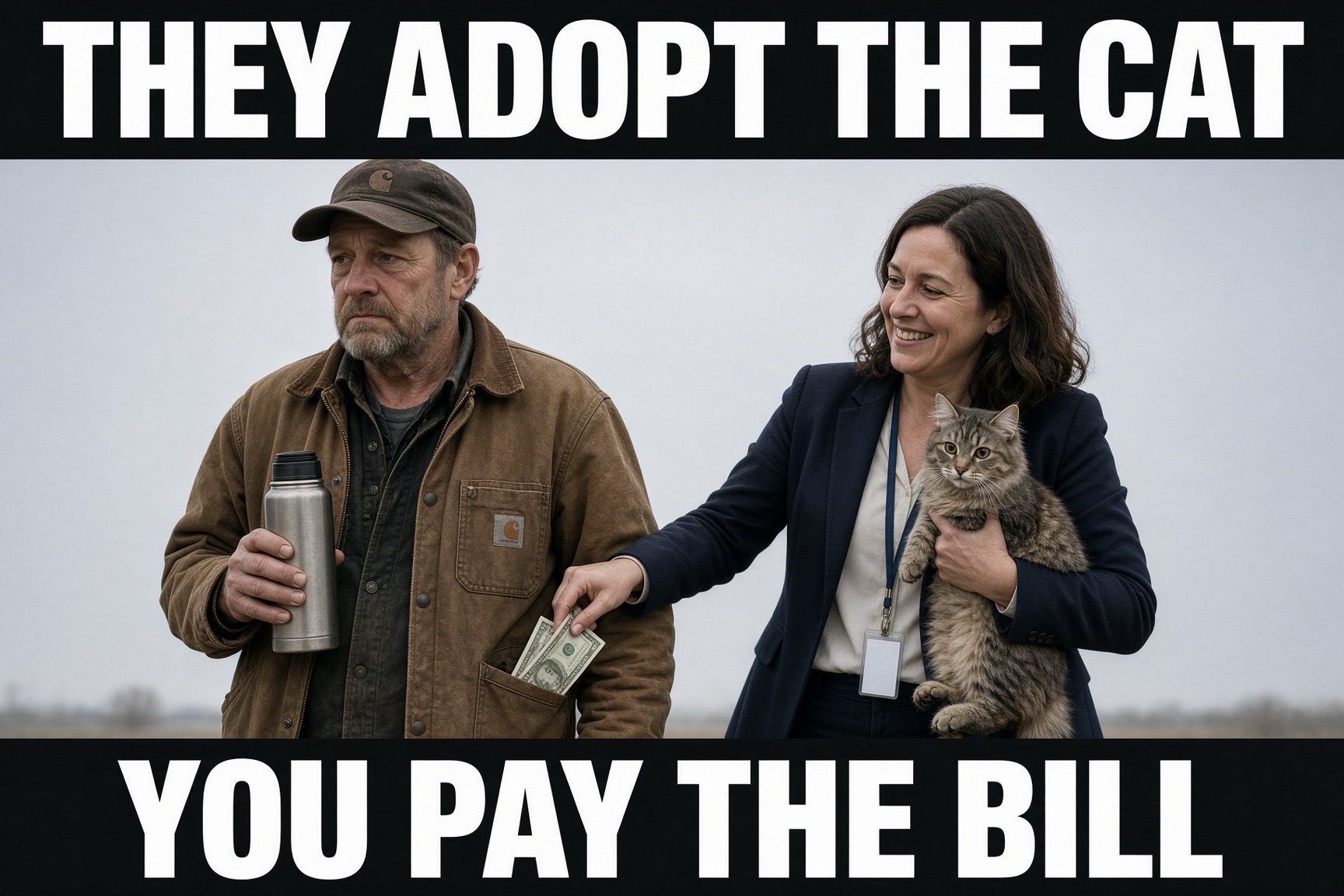
There is a sickness walking around Minnesota in sensible shoes and a lanyard. It wakes up every morning determined to save a cat, a dog, a child, a refugee, the planet, or “the less fortunate.” It just refuses to pay for it.
The people who actually pay are the ones who get up before dawn and do it again the next day. The machine operator in Faribault. The nurse coming off a double. The farm couple checking cattle in the dark. The parish secretary balancing the books on cash-basis accounting because that’s what honesty looks like. The veteran who already gave his prime years and still clocks in. Most of them are not plotting. They are not “the resistance.” They are just trying to keep a roof on, keep the kids fed, and stay on the right side of the Commandments. They have been told for so long that this is compassion that they no longer notice the extraction. The sickness has been industrialized and then normalized. It looks like a grant, a program, a press release about “equity,” a new shelter that costs millions and houses seven people. It looks like the way Minnesota just works now. They do not see the racket because the racket learned to speak the language of mercy while emptying their pockets.
If you notice the pattern and say no, you become the villain. You lack compassion. You are the problem. The people running it know exactly what they are doing. Some of them enjoy it.
That is the disease.
The cute version first
Minnesota’s animal-rescue world already shows the pattern in miniature. Weak laws, fragmented oversight, foster networks exempt from inspection, and the occasional raid that finds dead cats and dogs stacked with the living. People who claim to rescue animals have been charged with tax fraud, neglect, and worse. Donors pull back when the books look like a personal slush fund. Meanwhile ordinary Minnesotans are surrendering pets they can no longer afford because vet bills and rent went nuclear. The “save them” industry still wants more public money and more moral authority.
Now scale that up from cats to human beings and you have the criminal industry that has been looting this state.
The industrial version
Feeding Our Future started as “feed the children.” It became a quarter-billion-dollar meal that never existed. Then the same networks moved into Medicaid autism therapy, housing stabilization, personal care, group homes, and child-care subsidies. Prosecutors have described industrial-scale theft. Estimates of losses across high-risk programs have been put in the billions. Dozens of defendants, the large majority from one immigrant community that votes as a bloc, have been charged or convicted. Spouses and relatives of the convicted kept collecting. State agencies kept paying. Warnings from inside DHS were ignored or punished. The Attorney General’s office found ways to let some operations continue.
Housing programs that were supposed to cost a couple million a year exploded past $100 million. Autism billing exploded. Child-care centers billed at rates that only make sense if the kids were theoretical. Group-home operators collected tens of millions while the actual care was optional. When federal heat finally arrived, payments were paused, raids happened, and the political class clutched pearls about “access to care.”
This was never accidental. It was a business model: wrap extraction in the language of rescue, smear anyone who asks for receipts, and keep the voting and contracting pipeline open.
The same people who lecture you about “the children” ran programs that treated disabled kids and the homeless like lottery tickets. The same people who lecture you about “welcoming the stranger” built networks that sent taxpayer money overseas while Minnesota families paid the freight. Some of the operators knew the harm. They still cashed the checks.
That is not compassion. That is a syndicate using your decency as cover.
How the smear works
If you say the obvious—that you cannot adopt every cat in the state by emptying your neighbor’s checking account—you are called heartless. If you point out that 81 percent of one community’s households are on welfare while native households sit at 21 percent, you are a bigot. If you note that the same political machine that ignored fraud warnings also expanded eligibility and fought audits, you are “dividing us.”
The deceived foot soldiers actually believe they are saving the world. The operators know they are running a protection racket. Both groups need the working Minnesotan to stay quiet and keep paying.
True charity looks different. It is the parish that feeds people from the collection plate. It is the veteran who mentors a kid without a grant application. It is the farm family that takes in a relative instead of billing Medicaid for “stabilization services.” Jesus did not send the tax collector to fund the loaves and fishes. He told individuals to give of what they had.
A constitutional republic can have a safety net. It cannot survive a compassion industry that treats the treasury like an ATM and calls dissent cruelty.
The Minnesota we can still choose
We can be a state of producers again—farmers, tradesmen, nurses who actually show up, parents who raise their own children, churches that practice the corporal works of mercy without a federal middleman. We can audit every high-risk program to the last dollar, prosecute the networks as the rackets they are, and stop confusing coerced extraction with love of neighbor.
The people who wake up every day looking for a new cat to adopt at your expense will call that cruelty. Let them. The ones who know they are running a criminal industry will call it a threat. That is the point.
Minnesota does not need another grant for another rescue that never rescues. It needs adults who tell the truth, protect the vulnerable without looting the productive, and remember that charity you force someone else to pay for is just theft with better branding.
Phillip C. Parrish
Heidi Wanty, heidi@parrish4mn.com
(612) 460-1717
Christ is King. The books will be opened.
###