By Phillip C Parrish, Candidate for Governor of Minnesota 2026
August 28, 2025
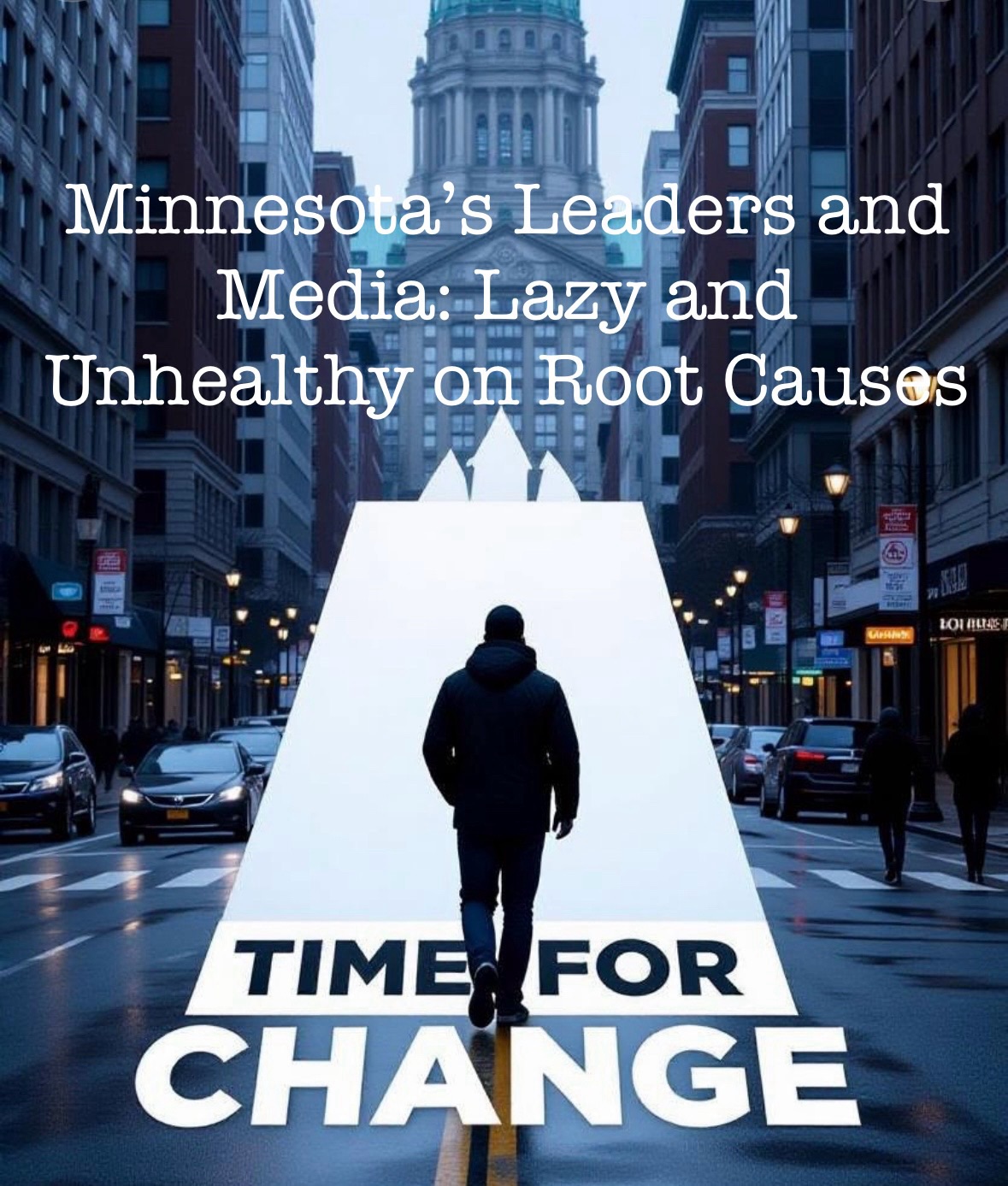
In my recent articles, I’ve exposed how Minnesota’s elected officials, like Governor Tim Walz, Attorney General Keith Ellison, and Mayor Jacob Frey, exploit tragedies such as the August 27, 2025, Annunciation Catholic School shooting to push intellectually broken agendas focused on gun control while ignoring deeper issues like childhood trauma, mental health crises, and personal accountability. This deflection perpetuates generational harm and enables perpetrators through denial and appeasement. But the problem runs deeper: Our officials, bureaucrats, and legacy media demonstrate a profound laziness and unhealthy approach to these subjects. It takes minimal effort and genuine willingness to dig into root causes—yet they opt for superficial narratives that sustain division and inaction. Today, I’ll call out specific examples from Minnesota, substantiated by their own words and actions, and demand a fundamental change in behavior. Minnesotans deserve leaders who confront truth, not evade it for political convenience.
Lazy Official Responses: Gun Blame Over Trauma Investigation
Governor Tim Walz’s handling of the Annunciation shooting exemplifies this laziness. In his immediate statement, Walz ordered flags at half-staff specifically for “victims of gun violence” and described the event as a “horrific act of violence,” vowing to “stand with this community.” While briefed on the incident, he made no mention of investigating the shooter’s potential history of childhood abuse, mental instability, or transgender-related treatments—factors we’ve discussed that could link to patterns of violence. Instead, his framing centered on guns, aligning with Democratic calls for control without the effort to address why only 29% of adults with mental illness receive treatment nationwide. This is unhealthy: By avoiding deeper probes into trauma (e.g., through expanded ACEs screening), Walz perpetuates cycles where unaddressed defiance escalates to tragedy, as seen in the shooter’s anti-Trump fixation manifesting in violence.
Attorney General Keith Ellison’s response is equally telling. At a vigil following the shooting, Ellison called for a “national ban on assault rifles,” focusing solely on firearms without referencing mental health support or trauma prevention. His office handles child abuse cases, yet broader policies under his watch prioritize enforcement over proactive reforms. For instance, Minnesota’s Children’s Justice Act Task Force discusses maltreatment, but Ellison’s public emphasis remains on gun laws, ignoring evidence that childhood trauma strongly predicts antisocial behaviors. This selective focus requires little investigative effort but is unhealthy, as it distracts from systemic failures like underreporting of abuse due to stigma, enabling more perpetrators.
Mayor Jacob Frey’s statements further illustrate this pattern. From the church steps, Frey urged against mere “thoughts and prayers,” noting the children were “literally praying,” and used the presser to advocate for transgender rights amid reports of the shooter’s identity. While implying action, his history and Democratic alignment point to gun control pushes, not demands for trauma-informed care in schools. In Minneapolis, where the shooting occurred, city bureaucrats oversee child protection, yet audits reveal inconsistencies in removals and reunifications for abuse cases, often prioritizing family preservation over thorough trauma assessments. Frey’s approach is lazy—skipping the work to connect dots between abuse, ODD, and violence—and unhealthy, fostering a victimhood culture that externalizes blame.
Bureaucrats in Minnesota’s Department of Human Services (DHS) compound this. While DHS promotes trauma-informed care, implementation lags: A 2022 audit criticized uneven child protection responses, with removals not always addressing co-occurring issues like domestic violence and trauma. Despite task forces on child protection, officials fail to mandate universal ACEs screening statewide, opting for piecemeal efforts that ignore how unaddressed trauma breeds sociopathy. This bureaucratic inertia is unhealthy, perpetuating generational harm through avoidance.
Legacy Media’s Unhealthy Superficiality: Sensationalism Without Depth
Minnesota’s media outlets, like the Star Tribune and local affiliates, mirror this laziness in their coverage. Post-shooting reports emphasized gun control calls by Democrats, with headlines like “Democrats renew calls for gun control after Minnesota school shooting,” framing the issue around “weapons of war” without exploring the shooter’s mental health or potential trauma history. Some noted rising “mental health concerns,” but coverage was superficial, relying on police narratives rather than investigating links to childhood abuse or fixation patterns. For broader issues, media underreports child abuse prevention, as seen in limited coverage of the Legislative Task Force on Child Protection’s 2024 meetings, which discussed the African American Family Preservation Act but received scant analysis on trauma’s role. This is unhealthy: By amplifying sensational aspects (e.g., the shooter’s trans identity) over substantive ones, media contributes to stigma and contagion, as APA studies warn.
Demand for Change: Effort, Willingness, and Accountability Now
Minnesotans, this laziness and unhealthy deflection must end. Walz, Ellison, Frey, and bureaucrats: Stop exploiting tragedies for political gain—invest the effort to prioritize trauma-informed policies like statewide TF-CBT and ACEs screening. Media: Demand deeper reporting on root causes, not just surface-level sensationalism. As your next Governor, I’ll enforce these changes, but it starts with you: Contact officials, support my campaign at parrish4mn.com, and vote in 2026. We deserve better—act now to break the cycles of harm.
###