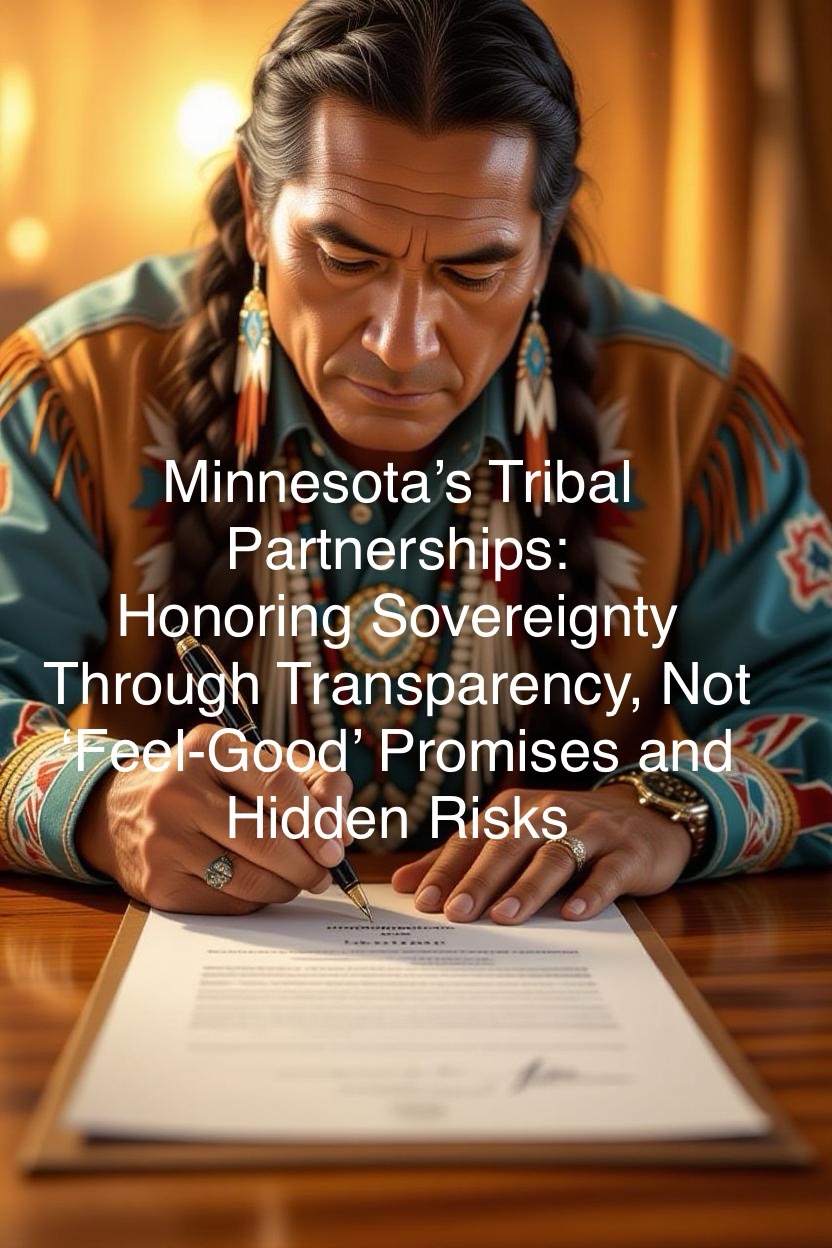
As a candidate for Governor of Minnesota in 2026, I, Phillip C. Parrish, remain committed to working alongside our state’s 11 federally recognized tribal nations to address the historical injustices stemming from treaty violations. Recognizing that tribes maintain a sovereign government-to-government relationship with the federal government, our shared history calls for the state to honor their sovereignty, support the restoration of wrongfully taken lands where appropriate, and foster collaborative partnerships that uplift tribal communities while benefiting all Minnesotans. We must proceed thoughtfully to avoid unintended consequences. I appreciate efforts like the return of sacred lands to the Upper Sioux Community and the Leech Lake Band of Ojibwe as potential steps toward healing and equity. These actions should align with our moral and legal obligations under treaties such as the 1837 and 1851 agreements, and I pledge to prioritize respect for tribal sovereignty in my administration through careful oversight and consultation.
However, history warns us against the dangers of well-intentioned but poorly executed “feel-good” promises by politicians that ultimately perpetuate violations and deepen injustices. For instance, in the 1830s, President Andrew Jackson championed the Indian Removal Act, promising Native tribes safe relocation to new lands in exchange for their ancestral territories, framing it as a benevolent path to prosperity and protection. Yet this led to the Trail of Tears, where thousands of Cherokee, Choctaw, and other tribes died from disease, starvation, and exposure during forced marches, resulting in massive land loss and cultural devastation—a direct violation of earlier treaties and trust. Similarly, the Dawes Act of 1887, promoted by reformers and politicians like Senator Henry Dawes as a compassionate means to “civilize” Native Americans through individual land allotments and assimilation, instead fragmented reservations and enabled the sale of “surplus” lands to non-Natives, stripping tribes of over 90 million acres and exacerbating poverty. In the 1950s, the federal termination policy under President Dwight Eisenhower promised economic independence and integration for tribes by ending federal recognition, but it dissolved over 100 tribes’ status, leading to loss of lands, services, and sovereignty, with long-term effects of displacement and hardship. Closer to home in Minnesota, the 1851 Treaty of Traverse des Sioux with the Dakota promised annuities, reservations, and support in exchange for vast land cessions, but corrupt officials siphoned funds, leading to starvation, the U.S.-Dakota War of 1862, mass executions, and exile—violations that echo through generations. These examples illustrate how politicians’ premature victory laps over symbolic gestures often masked systemic failures, furthering injustice rather than resolving it.

Recent developments under the Walz administration—such as cannabis compacts, land transfers, and symbolic gestures like the Tribal Flag Plaza—raise serious concerns about incompetence, opacity, and the potential for unintended divisions, potentially mirroring these historical pitfalls. As a patterns analyst would note, recognizing behaviors over feel-good words is crucial, and here we see a clearly defined pattern from Governor Tim Walz, Lieutenant Governor Peggy Flanagan, and the MNDFL of pushing legislation and policies that enable and promote fraud, often under the guise of progressive equity. For example, the Feeding Our Future scandal saw $250 million in federal child nutrition funds siphoned through fraudulent kickbacks and false reporting during the COVID-19 era, with Walz’s administration criticized for lax oversight and delayed action despite early warnings from the Minnesota Department of Education. This was followed by rampant Medicaid fraud cases involving over-billing, fake services, and Somali-led nonprofits, totaling hundreds of millions more, where policies expanded access without sufficient safeguards, leading to an estimated $1 billion in overall fraud under Walz’s watch. Recent FBI investigations into autism services and housing programs further highlight this pattern, with allegations of fraud in the Department of Human Services amid claims of hands-off leadership and political favoritism. Flanagan, as a key administration figure, has been involved in promoting these expansive social programs, yet scandals persist without meaningful accountability, echoing MNDFL policies that prioritize rapid implementation over fraud prevention. While these initiatives are touted as progressive steps toward equity, they risk furthering injustice by celebrating prematurely without addressing underlying conflicts, such as the lack of transparency in negotiations that could create economic imbalances or invite federal crackdowns on cannabis activities still illegal under national law. For example, granting tribes tax exemptions and off-reservation market access in cannabis deals may seem like empowerment, but without full stakeholder input, it could pit tribal enterprises against non-tribal businesses, fostering resentment and economic divides similar to the allotment-era fragmentations. Land returns, while rightful, have been handled with limited public discourse, leading to abrupt park closures and local frustrations that echo the unfulfilled promises of past treaties. By taking victory laps through ceremonies and proclamations without robust safeguards, the administration risks repeating history: feel-good optics that overlook potential quid pro quo perceptions, where political endorsements or benefits might influence decisions, ultimately undermining true reconciliation and exposing tribes to backlash or policy reversals.
When decisions are made behind closed doors without broad stakeholder input, they risk pitting Minnesotans against one another, eroding trust, and opening the door to perceptions of quid pro quo arrangements that prioritize political gain over public good. This is not the collaborative governance our state deserves.
To ensure transparency and fairness, I call for full public involvement in all state-tribal negotiations and initiatives. This means open forums, accessible records, and inclusive consultations that engage citizens, tribal members, local governments, businesses, and community organizations from the outset. Furthermore, where federal laws or oversight are implicated—such as in matters involving controlled substances, treaty enforcement, or land held in federal trust—I urge immediate and robust involvement from federal authorities, including the Bureau of Indian Affairs and the Department of Justice, to safeguard compliance and prevent any overreach.
To promote clarity, prevent misunderstandings, and uncover any potential improprieties, I encourage all Minnesota citizens and tribal members to ask the following key questions of our leaders and each other:
1. What specific criteria and processes were used to negotiate cannabis compacts with tribes, and why were these discussions conducted privately without legislative oversight or public hearings?
2. How do tax exemptions and off-reservation business allowances in these compacts ensure a level playing field for non-tribal businesses, and what measures are in place to prevent market dominance that could harm economic competition?
3. In land return initiatives, what steps were taken to assess and mitigate impacts on public access, local economies, and non-tribal stakeholders, and were alternative solutions considered to balance tribal rights with community needs?
4. Have any state officials or their associates received personal or political benefits—such as campaign contributions, endorsements, or other favors—from tribal entities or related parties in connection with these agreements, and if so, how were conflicts of interest disclosed and managed?
5. What federal reviews or approvals were sought for activities that intersect with national laws, like the Controlled Substances Act, and what contingency plans exist if federal enforcement policies change?
6. How are tribal members themselves involved in decision-making within these compacts and land transfers, and what mechanisms ensure that benefits accrue directly to tribal communities rather than external interests?
7. What independent audits or third-party evaluations have been conducted to verify the transparency and equity of these processes, and when will the full details be made publicly available?
8. In what ways do these initiatives address or potentially exacerbate historical divisions between tribal and non-tribal groups, and what reconciliation efforts are planned to foster unity?
By posing these questions and demanding answers, we can build a stronger, more united Minnesota—one that truly honors our tribal partners while upholding accountability for all. Together, we can correct the past without repeating its mistakes, ensuring that promises lead to lasting justice rather than further violations.
With unwavering dedication,
Phillip C. Parrish
Candidate for Governor of Minnesota 2026
###