In an era of heated political rhetoric, one phrase echoes relentlessly across media outlets, classrooms, and public speeches: “America is a democracy.” Yet, this seemingly innocuous label carries profound implications, as it obscures the true nature of the United States as a constitutional republic. This distinction is not mere semantics; it lies at the heart of the Founders’ vision for a government that protects individual rights against the whims of majority rule. The persistent misuse—whether through laziness, ignorance, or intentional manipulation—has infiltrated education systems, journalism, and everyday discourse, contributing to a broader societal decline. This article examines the historical roots of this error, provides examples of its proliferation, and argues why reclaiming the “republic” label is essential for the nation’s survival.
The Founders’ Intent: A Republic, Not a Democracy
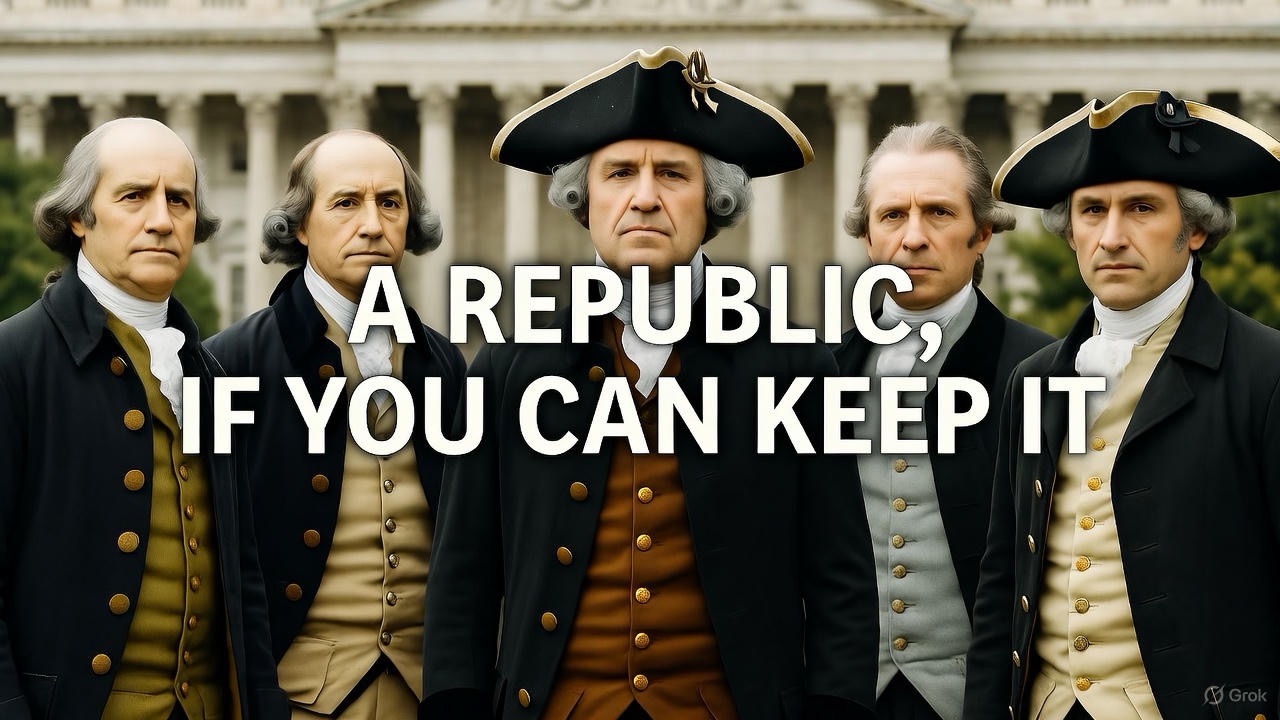
The United States Constitution makes no mention of “democracy,” but it explicitly guarantees “a Republican Form of Government” to every state in Article IV, Section 4. The Framers, drawing from classical history, viewed pure democracies as unstable and dangerous, prone to “mob rule” where passions could trample minority rights. James Madison, in Federalist No. 10, distinguished republics from democracies, emphasizing that republics filter public opinion through elected representatives to prevent factional violence. John Adams warned that democracies “never last long” and end in self-destruction, while Benjamin Franklin famously responded to a query about the new government with, “A republic, if you can keep it.”
Other Founders echoed this sentiment. Thomas Jefferson praised the republican form as the only one not at war with human rights, and Benjamin Rush called simple democracy “one of the greatest of evils.” This aversion stemmed from examples like ancient Athens, where direct democracy led to tyranny. The Constitution’s design—separation of powers, federalism, the Electoral College, and an unelected judiciary—reflects this republican framework, prioritizing checks and balances over unchecked majority will.
The Historical Shift: From Pejorative to Pervasive
In the early republic, “democracy” was often a derogatory term, associated with radicalism and disorder. Its positive connotation emerged gradually, accelerating during the Progressive Era and World War I, when leaders like Woodrow Wilson used it to rally against autocracies. By the 20th century, the term had seeped into education and media, often rebranding the U.S. as a “representative democracy” or simply “democracy.”
Examples abound in modern contexts. U.S. Citizenship and Immigration Services (USCIS) materials describe the nation as a “representative democracy,” downplaying republican safeguards. In media, outlets like NPR acknowledge the debate but conclude the U.S. is both, blurring lines for audiences. Politicians routinely invoke “democracy” in speeches—Senator Chuck Schumer recently claimed, “We are a democracy,” during “No Kings” rallies—despite the Pledge of Allegiance affirming allegiance “to the Republic.” On social platforms like X, users frequently correct this: one post notes, “The United States of America is a Constitutional Republic not a democracy,” highlighting frustration with Democratic leaders’ rhetoric.
This shift isn’t accidental; critics argue it’s a deliberate effort to erode constitutional awareness, fostering acceptance of majority-driven policies that bypass republican checks. In education, curricula emphasize voting rights under a “democracy” banner, neglecting the Framers’ warnings, which has led to a “steady erosion of civic education” where Americans are “politically and civically asleep.”
The Consequences: Erosion of Discourse, Education, and Families
Mislabeling the U.S. as a democracy has tangible impacts on public discourse, fueling polarization by implying that majority opinion should always prevail, unchecked by constitutional limits. This mindset contributes to misinformation campaigns that erode confidence in institutions, as seen in declining trust amid deliberate disruptions to democratic processes—ironically, while misusing the term itself.
In education, the confusion exacerbates declines. Political interference, such as bans on teaching “divisive concepts” like systemic racism, creates confusion for educators and diminishes education’s role in sustaining informed citizenship. Low literacy and civic knowledge make voters susceptible to manipulation, threatening democratic participation. School boards, preoccupied with culture wars, allow student performance to lag, as American pupils fall behind globally. This “intellectual decline” stems from a mix of disinformation and devaluation of critical thinking, undermining the republican emphasis on educated governance.
On families and society, the ripple effects are profound. Eroded civic awareness fosters division, weakening community bonds and family structures amid broader cultural shifts. As one analysis notes, attacks on education aren’t just cultural—they assault democratic values, leading to a society less equipped to uphold republican principles. X users echo this: “America is a constitutional republic not a pure direct democracy,” urging a return to foundational truths to combat perceived declines.
Why This Matters: An Imperative for Survival
Reclaiming the “constitutional republic” label is vital because it reinforces protections against tyranny—precisely what the Founders designed. Misuse invites demands for “more democracy,” which can erode these safeguards, leading to instability akin to historical democracies’ fates. In a time of misinformation and polarization, accurate terminology fosters informed debate, strengthens education, and preserves family and societal cohesion. Without it, the U.S. risks further decline, as unchecked majorities could override rights, mirroring the “banana republic” warnings some invoke. As Franklin implied, keeping the republic demands vigilance—starting with precise language.
In conclusion, the intentional or lazy conflation of “democracy” and “republic” isn’t harmless; it’s a systemic factor in America’s challenges. By substantiating this through history, examples, and impacts, we see the urgency: educate, correct, and advocate for the truth to ensure the republic endures.