By Phillip C Parrish, Candidate for Governor of Minnesota 2026
August 29, 2025
Over the past few days, in this series of articles, I’ve laid bare the failures plaguing Minnesota’s approach to violence and generational trauma. In “Facing the Truth: Minnesota’s Leaders Exploit Tragedy to Perpetuate Harm—It’s Time for Real Change,” I exposed how leaders like Governor Tim Walz, Attorney General Keith Ellison, and Mayor Jacob Frey exploit tragedies like the Annunciation Catholic School shooting to push intellectually broken agendas centered on gun control, deflecting from root causes such as unaddressed childhood trauma and mental health crises. This external blame erodes personal accountability and deepens social decay.
Building on that, “From Truth to Action: Implementing Proven Strategies to Combat Generational Trauma in Minnesota” outlined evidence-based solutions like Trauma-Focused Cognitive Behavioral Therapy (TF-CBT) and universal Adverse Childhood Experiences (ACEs) screening, emphasizing the need to confront oppositional defiant behaviors and negative fixations early to prevent manifestation of harm.
Then, in “Minnesota’s Leaders and Media: Lazy and Unhealthy on Root Causes—Time for Change,” I called out the laziness of officials and legacy media in Minnesota, who opt for superficial narratives on guns while ignoring the effort required to address trauma cycles, enabling more perpetrators through denial.
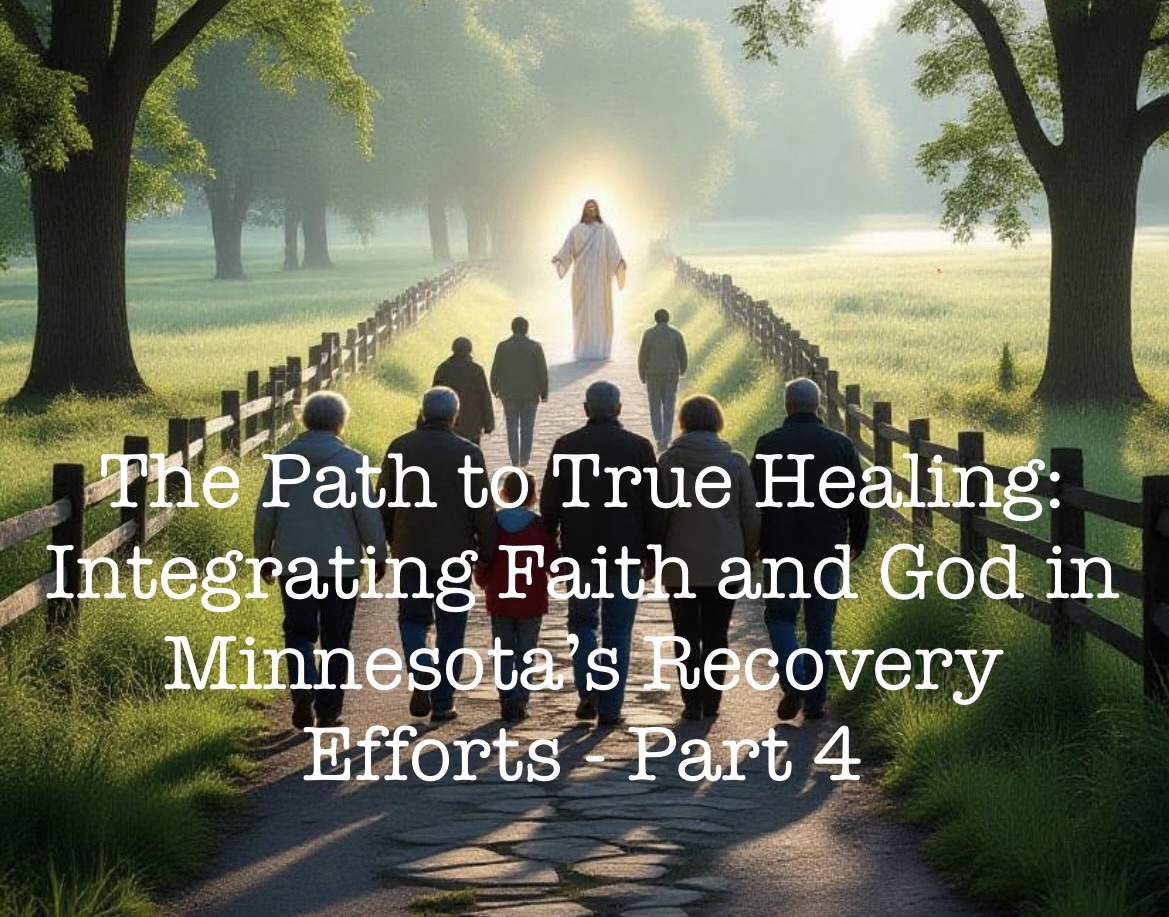
Now, in this critical fourth installment, I tie it all together by highlighting what is often overlooked: the indispensable role of faith and a genuine relationship with God—the Father, Son, and Holy Spirit—in achieving true, holistic healing. Based on my personal experiences as a lifelong Minnesotan, my professional career in education and trauma treatment at Gerard Programs, and my 21 years in intelligence and counter-terrorism, I’ve witnessed that those who develop a contrite, authentic faith overcome trauma and behavioral challenges far more successfully. Programs incorporating the divine are significantly more effective because they treat the whole person—body, mind, and soul. Without the healing power of our Lord and Savior Jesus Christ, recovery remains incomplete, as secular approaches alone cannot fully mend spiritual wounds. This directly counters the intellectual brokenness of fixating on negatives (e.g., guns or external blame), which manifests more harm; instead, focusing on God’s positives—mercy, grace, and forgiveness—manifests healing and restoration.
The Intellectual Tie: From Negative Fixation to Divine Positive Focus
The obsession with guns and external forces, as critiqued in my first article, exemplifies a negative fixation that perpetuates division and decay. Psychological research shows that rumination on harm amplifies distress and aggression, creating self-fulfilling prophecies of violence. In contrast, a faith-centered positive focus—reflecting on God’s promises and grace—manifests resilience and healing. Studies on positive spiritual rumination confirm it reduces depression and enhances well-being, with participants experiencing transformative outcomes through divine alignment. This shift is the missing piece in the strategies from my second article: While TF-CBT reduces PTSD symptoms by 50-70%, integrating faith boosts adherence and long-term success, as seen in religiously adapted therapies. Leaders’ laziness, as called out in my third piece, avoids this truth, prioritizing partisan agendas over holistic solutions that could prevent tragedies by healing the soul.
My observations are substantiated: Individuals with a genuine faith relationship report lower PTSD and anxiety, often through mechanisms like divine forgiveness that secular methods overlook. In Minnesota, programs like Adult & Teen Challenge demonstrate this, where faith-based recovery has helped thousands overcome addiction and trauma, with success stories highlighting spiritual transformation leading to sustained sobriety and behavioral change. Similarly, Avivo’s integrated approach includes faith elements, with clients like those dealing with PTSD crediting community and spiritual support for their recovery. These align with national data: Faith-adapted CBT yields higher efficacy, reducing relapse by 41% in depression treatment.
Why Faith is Critical: Treating Body, Mind, and Soul
True healing demands addressing the spiritual dimension, as I’ve seen in miracles of restoration through Jesus. Without God, efforts are partial—body and mind may improve, but the soul’s wounds linger, leading to incomplete recovery. Evidence supports this: Spiritually integrated psychotherapy (SIP) enhances coping with trauma, improving resilience when faith is included. In faith-based programs for incarcerated trauma survivors, spiritual elements reduce PTSD and recidivism significantly. Minnesota examples abound: The Center for Family Counseling offers Christian therapy that incorporates faith for holistic healing, with clients reporting profound changes. Evangelhouse provides trauma treatment for girls, blending faith with evidence-based care for supportive recovery.
This is the capstone to my series: While previous articles exposed failures and proposed actions, faith is the critical step for full healing. We cannot achieve it without God’s mercy, grace, and forgiveness—manifesting positives through divine focus breaks the negative cycles leaders ignore.
Action Items and Policies: Incentivizing Faith-Based Healing in Minnesota
As Governor, I’ll advocate for policies that encourage and incentivize faith-integrated programs, recognizing their superior outcomes. These are non-partisan, evidence-backed steps to treat the whole person:
1. State Grants and Incentives for Faith-Based Programs: Expand SAMHSA-funded block grants to prioritize faith-adapted therapies, providing matching funds for organizations like Adult & Teen Challenge. Federal resources from HHS and CMS already support such partnerships; Minnesota can allocate $10 million annually in incentives for programs demonstrating 20% higher success rates through spiritual integration.
2. Training Mandates for Educators and Bureaucrats: Require DHS and school staff to undergo training on spiritually integrated care, partnering with groups like the Tennessee Faith-Based Initiatives for holistic models. This includes workshops on R-CBT, reducing stigma and incorporating faith to address ODD and trauma early.
3. Tax Credits and Partnerships with Faith Communities: Offer tax credits to churches and nonprofits providing trauma recovery, inspired by successful models in HRSA-eligible programs. Collaborate with faith leaders for community healing events, as seen in the Emmett Louis Till Victim Recovery Program’s holistic focus.
4. Public Awareness Campaigns on Faith’s Role: Launch state-funded campaigns highlighting success stories from Minnesota programs, encouraging focus on divine positives to manifest healing, countering negative fixations.
5. Legislative Protections for Faith Integration: Enact laws ensuring faith-based elements in treatment aren’t marginalized, drawing from ACF grants that fund behavioral health with spiritual components.
A Final Call to Action: Embrace Faith for Minnesota’s Future
Minnesotans, the truths in this series demand we reject lazy deflections and embrace God’s healing. Without faith, we cannot fully heal—join me in advocating for these policies. Contact leaders, support faith programs, and vote for change in 2026. Visit parrish4mn.com to get involved. Through God’s grace, we’ll build a healed state. #FaceTheTruth
###